Wednesday – Leominster – Heavy dark clouds move across the sky during the morning but by early afternoon although large cumulus clouds still move slowly eastwards. The sun is now beating down and it is getting hot. The footbridge over the railway is still closed. There is obviously little effort to do a rapid job to ensure the national footpath which runs over this bridge is accessible. Into Pinsley Mill. Flowering Rosebay Willowherb stands high inside the railway. Bees move from flower to flower. Brambles have an extraordinarily heavy crop of young blackberries which will be ripe in maybe a month’s time. Meadowsweet is coming into flower.
Into the Millennium orchard. A Chiffchaff calls, more of a chiff-chiff-chiff than than chiff-chaff. A Buddleia is in flower but sadly there is not a single butterfly on it. A large patch of Greater Knapweed is attracting bees, hoverflies and a few Meadow Brown butterflies. A Ringlet is in the grass. The Peace Garden has been mowed but there are still large stands of Stinging Nettles. The River Kenwater is very shallow.
A Red-tailed Bumblebee, Bombus lapidarius, investigates every floret of a small White Clover in the graveyard.
Friday – Leominster – Despite a brisk wind and some “Simpsons clouds”, it is getting very warm in the afternoon. A Red Kite circles over The Grange. Into Pinsley Road. A large Buddleia is in blossom and several Peacock and Red Admiral butterflies are feeding. The Rowan trees in front of the west end of the priory church are heavy with berries. Scarlet Pimpernels grow profusely around the weathered graves by the west wall.
Down The Priory to Priory Bridge. The River Kenwater is crystal clear but seemingly lifeless. Through Bridge Street car park, formerly site of the town gasometers. A Great Black-backed Gull flies through, not a common sight here. The flower bed with the model Ryeland sheep and apples tree has a fine display of multi-coloured Thrift, bellflowers in purple and white, Coral Bells and Verbenas, all attracting a good number of bees and a Painted Lady butterfly.
Home – I check out the gooseberry bush that is near the pond. This area is a mess and some Brambles need removing soon, as they are spreading far and wide. The gooseberries are not ripe yet. So no fruit and then time wasted removing Cleavers and grass seeds from my clothing!
The crippled Jackdaw is still in the garden. S/he disappears into the bushes when anyone approaches. I think s/he has a deformed leg as well as difficulty in flying.
Sunday – Leominster – Dark clouds cover much of the sky, but the forecasts insist there is little or no rain for at least a week. There is a cooling breeze though. Across the Grange. Jackdaws and Wood Pigeons fly over, more pigeons are calling from the rooftops and a Wren is singing loudly from a garden. A large bed of flowering lavender is by the old school; it is being visited by numerous bees.
Into Mill Street. The road either side of the level crossing has finally been resurfaced, filling the large deep potholes that have been there for some considerable time. Pond Skaters have at last arrived on the River Lugg under Ridgemore Bridge. The caterpillar-tracked machine that removes the surface of the road is sitting in the lay-by. A bitumen tanker is in the petrol station car park. The market is larger than last week.
Home - I start clearing the path along the west wall. Various small branches are cut off. The gooseberry needs tying back. A couple of large Elder saplings are removed along with a Damson. A smaller Horse Chestnut is removed and some Willow stems. A few potatoes are dug for dinner along with even fewer mange tout peas and broad beans.
Hoppy the one-legged Jackdaw is getting tamer. It searches around the base of the feeders, flicking over leaves. A large Brown Rat appears by the Wellingtonia stump. The Jackdaw and rat ignore one another. Young, pale Blue Tits visit the feeders.
Monday – Home – The air is warm despite a breeze and quite a lot of cloud. The nettle patch at the end of the garden is rather a mess, over tall Stinging Nettles, unwelcome Black Bryony and Brambles. So I decide to have a clear out. About a third of the patch fills two large sacks and I have enough nettle stings for today.
Leominster – Across the Grange. Swifts scream overhead. A Wood Pigeon calls from one of the large trees in front of Grange Court. Few people are relaxing on the Grange. Through the town. It is early afternoon and getting hot.
Wednesday – Home – The heatwave continues and seemingly for some time yet! Yesterday and today completes the clearing of the Stinging Nettle bed. Brambles are removed as far as possible, but many go deep into the stony ground. In the heat of the afternoon, the broad beans are cleared apart from a couple of late planted ones. It has been a decent enough crop this year. The Tagetes, French Marigolds that have flowered in the bean bed seem to have been very successful in keeping blackfly away. Everything is suffering from the heat. A couple of courgette plants have very droopy leaves, but hopefully they will recover when the sun moves away and they get watered this evening. They are beginning to crop well. Unsurprisingly the potatoes are not doing well. The tops are now dying and the tubers underneath are small and few in number. They really needed watering heavily a few weeks ago and regularly since, but I do not water potatoes.
Kay has picked another large bowl of raspberries and the greengages are looking good but some time off ripeness yet. We now have a freezer drawer filled with this year’s raspberries, another filled with last year’s strawberries, plums and raspberries and yet another still with a number of trays of greengage purée also from last year.
Friday – Leominster – The heat goes on. The sky is cloudless. The temperature is again above 30°C. Swifts swirl around high above, screaming as usual, fattening up for the journey south which will begin soon. Down to Pinsley Mill. Despite the heat, Wrens and a Goldfinch are in song. The lower seed pods on Rosebay Willowherbs are already turning to white silky plumes. Blackberries are ripening to red. In the orchard the umbellifers are rapidly turning to seed. Likewise the Meadow Cranesbills live up to their name with the circular seed heads and long beaks. The Priory rector and organist stride past.
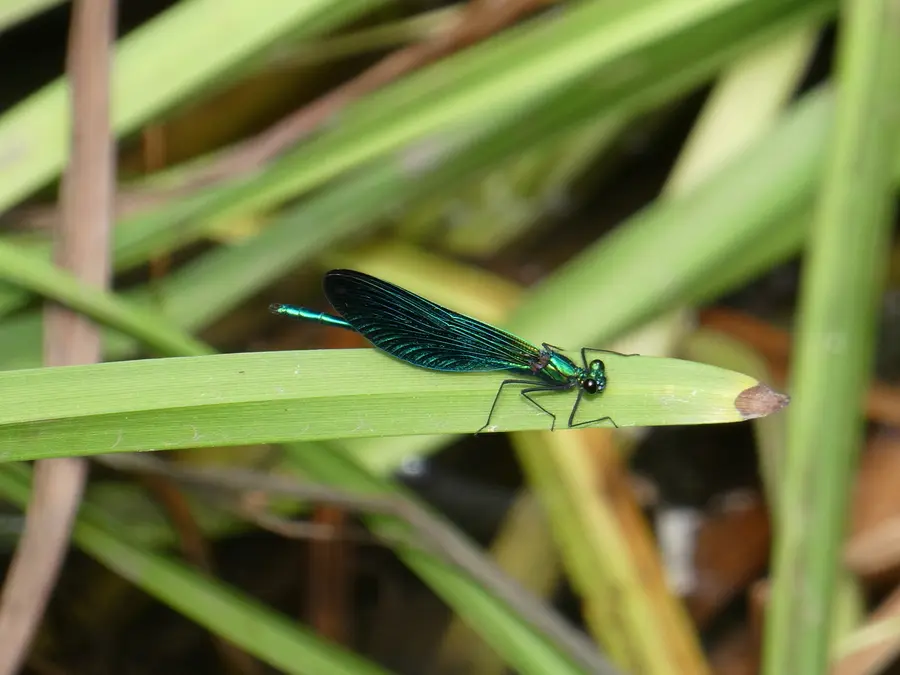
In the park, half a dozen Peacock butterflies are taking advantage of the last of the rich purple Buddleia flowers. Bees and Meadow Browns are on the Black Knapweeds. Yarrow is in flower. A Chiffchaff’s call is half-hearted. Several rabbits are on Pinsley Mead, which is somewhat unusual at this time of day. The River Kenwater gets ever more shallow. A Red Admiral butterfly visits Bindweed on the far bank. It is joined by a Beautiful Demoiselle, Calopteryx virgo. A young River’s Early Prolific plum tree on Pinsley Mead has a good crop but they are still hard and rather sour. The nearby greengage also has a fair crop but these too have some time to go until ripeness.
Into the churchyard. It looks like it will be a fairly prolific year for beech mast. Lots of people with young children are entering the priory church. At last there is a slight breeze and cloud are forming. A House Sparrow chirps.
The night remains warm, making sleeping somewhat unpleasant.
Sunday – Leominster – Some clouds and a breeze make the morning slightly cooler but the sun is still blazing down. Across the Grange and into Pinsley Road. Painted Lady butterflies are chasing around with shrubbery and down the tarmac. Past the old school where butterflies are flitting around the shrubbery, more Painted Ladies, Meadow Browns and Large Whites. Over the Priory Bridge and along Paradise Walk. The River Kenwater is crystal clear and very shallow. Along Mill Street and over Ridgemoor Bridge. The River Lugg is also very shallow and crystal clear with a shingle bank appearing on one place.
The market is not at maximum size but fairly busy. The cereal crop in the adjoining field is now golden and must be close to harvest.
Two large lorries carrying sheep pull into the petrol station car park. Back along Paradise Walk. Chiffchaffs call from either side of the Kenwater. Long‵tailed Tits chatter as they move through the trees. Yelping Lesser Black-backed Gulls are circling high above. Two decent sized Brown Trout swim under Priory Bridge. Past the west end of the priory church. Purple Loosestrife flowers on a patch of uncut ground and is being visited by large bumblebees.
Home – The air is heating rapidly. Some weeds are removed. Rampant vines and pruned and piled into the chicken run. The gooseberry by the pond is rather disappointing this year. A few more potatoes are dug.
Ivy is hanging in a large bunch over the path beyond the back wall. I cut as many trunks of it as I can find. Hopefully it will die back a bit and I will then pull it off the top of the wall.
Tuesday – Home – The temperature rises throughout the morning. Kay has a beautiful display of flowers both in front of the house and on the patio by the backdoor. Bees have been visiting regularly and this morning a Hummingbird Hawk Moth is feeding on those in the street. Its wings are a blur as its long tongue investigates the flowers. On the meadow, Gatekeeper, Large White and Meadow Brown butterflies are on the Black Knapweeds. A Painted Lady flies up from the museum roof.
Some compost is dug and sieved and emptied into a couple of troughs. Basil seedlings are picked out into the troughs. There are a couple of spare climbing beans in the greenhouse, so they fill in the bean stick bed where some have failed. A large number of Groundsel are growing here, so they are pulled up and fed to the hens.
The dwarf French beans are heavy with pods. Courgettes are now growing rapidly and in good numbers. I need to pick some of the Gladstone apples. Their texture is not good but it seems wrong to waste them. The Marjorie Pippin plum has some decent bunches on one side but little else. It looks like an Elder is encroaching on it and probably needs removing – a big job. I intend to strim the other side of the orchard but screws have fallen out of the housing that holds the starter cord. Fortunately, I am able to buy some replacements but the strimming will have to wait.
Most evenings large flocks of Jackdaws fly around the area making a horrendous din. They are also vocal in the morning although it is usually yelping gulls and persistently calling Wood Pigeons that wake me.
Wednesday – Bodenham Lake – My first visit to Bodenham since last November. The sheep field at the entrance is overgrown with nettles and thistles. A conifer in the field is dying, three Carrion Crows sit at the top. Sky is covered in cloud and there is a stiff breeze making it far cooler than recent days. Teasels stand high by the car park, their heads already gone to seed. Grasses along the track are parched. Many of the younger trees are showing signs of stress. Wood Pigeons are the only birds calling apart from the Peacock at Bodenham Manor on the hill.
Unsurprisingly, the water level in the lake is low. Large areas of the islands are exposed. Purple Loosestrife flowers at the waters edge. Greylags are on the far side. A few Mallard are around the islands, quacking weakly. A number of Canada Geese are around the water, surprising quiet. Pond Skaters are zipping across the surface. Water Mint flowers where the lake overflows. Creeping Thistle leaves are shrivelled.
Into the meadow. A few blackberries are ripe but the majority are a few weeks off. A large patch of Field Bindweed covers an area in bright white lights. Into the hide. One of the Mason wasps, Ancistrocerus species is on the window. The number of Greylags on the lake has increased considerably over the last year. Half a dozen Cormorants are on the Purple Loosestrife covered spit. A Grey Heron is nearby. A Kingfisher darts past the island. Canada Geese, again very quiet, glide across the water. A pair of Great Crested Grebes and a pair of Tufted Duck drift past. A pair of Mute Swans are in front of the southern hide. A pair of Coot squabble as usual. The Grey Heron flies across the lake, grunting. The Willows and Gorse have grown considerably, beginning to obscure the views from the hide. Various bumblebees visit the Black Knapweeds in front of the hide. Most of the St John’s Wort here has gone to seed.
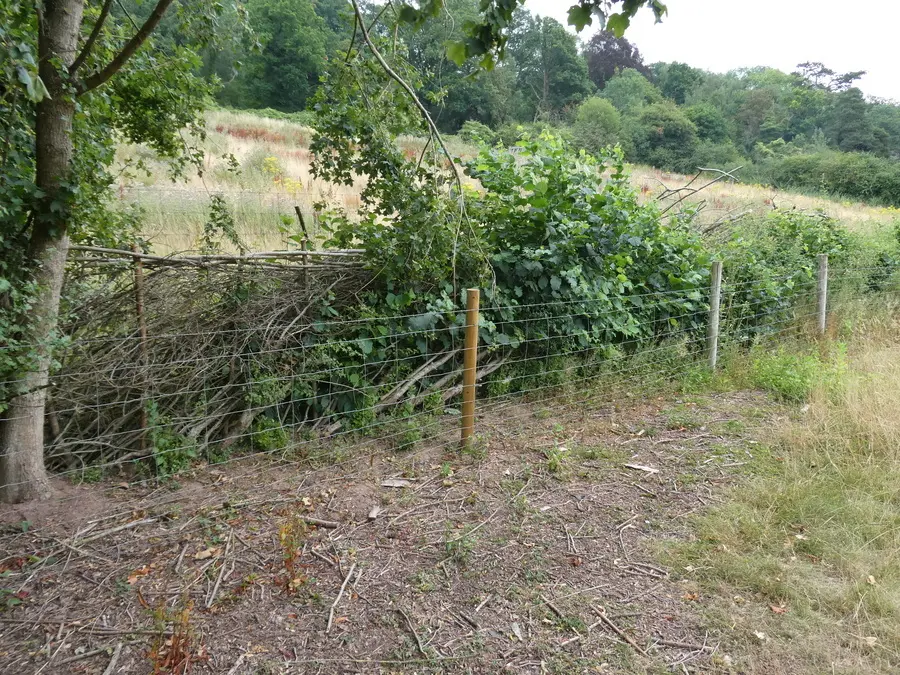
Back to the meadow. A long stretch of the hedge between the meadow and the fields leading up to Westfield Wood has been cut down and re-layed. The field is another that seems unused being covered in thistles, Dock and Ragwort. A Green Woodpecker calls from the wood. Further on the remaining Blackthorns have a good crop of sloes on it.
Into the cider apple orchard. The crop looks very mixed, some have a decent number of fruits, other very few. The same applies in the dessert Apple orchard. A Walnut has a fair crop. The Irish Peach, a reliably early apple had died. Another Green Woodpecker yaffles.
Thursday – South of The Wye – We visit some churches to the south west of the city of Hereford. The air is getting hot, again! We start at Old Clehonger which I visited a couple of years ago. The 17th century cottage next to the churchyard still looks abandoned. The church is locked. A Holly tree is covered in Ivy and a Bramble has grown 20 plus feet up the tree.
Eaton Bishop. The name means settlement by the water owned by the bishop. It was held by Harold Godwinson pre-Conquest and became afterwards the property of the Bishops of Hereford. The church of St Michael and All Angels is largely 13th century. There was a pre-Conquest church here which was rebuilt in the 11th century. The roofline of this church can still be seen on the wall at the west end of the nave. The tower was probably part of the Saxon church but rebuilt by the Bishop of Hereford in the 12th century and restored in 1927. The font is 13th century, with the addition of a Victorian bowl. The pulpit is a wineglass design, with carved wooden panels. In the chancel is a 14th century sedilia composed of three bays. The 422 pipe organ, built by Eustace Ingram of Hereford, was installed in 1888. In the north aisle is a monument of “Suffer the Children” dedicated to Lady Irva Keenan Pulley, born in Illinois in 1872 and died in 1942. In the apse is a monument to Richard Sneade dated 1714. Pevsner calls the putti “ugly”.
The glass in this church some of the finest in the country, indeed Pevsner calls it the finest. It is dated to 1330 to 1340 from the Lombardic inscription would refers to Adam Murimuth, “cantor”. He was likely Herefordshire born and was appointed as cantor of Exeter cathedral in 1328. His connection to Eaton Bishop is unknown. It is extraordinary that this glass, which contains three crucifixions, has survived given the iconoclasm of the 16th and 17th centuries. However there have been references suggesting the glass was removed and stored and re-mounted at a later date. It is likely that a number of pieces have been wrongly placed but this hardly detracts from the beauty of the great east window. There is further mediaeval glass in the South and North chancel windows.
Across the road from the church entrance is the former rectory, an early 18th century house with earlier origins. Adjoined to it is the Manor House, an 18th century house which had three storeys until the top one was removed in 1957.
Madley. Our route passes Honeymoor Common and crosses Stone (Stoney) Street, part of Watling Street from Vircononium (Wroxeter) to Isca Silurum (Caerleon). We visited in 2011. The church of the Nativity of the Blessed Virgin Mary has several windows containing mediaeval glass but in a mainly jumbled re-mounting of the 18th century. Most the pews have been removed and replaced with chairs in various formations. It gives the church a strangely empty feeling. An wooden eagle lectern is mounted by steps which have been pushed against a pillar rendering them inaccessible.
Friday – Hereford – High cloud filters the sun a little but does not do much to slow the rising temperature. It has been many years since I last visited St Bartholomew’s church, it was locked then and is locked now. A large group of Swifts scream as they fly low over the church roof. The large former rectory, expanded in the 19th century into a striking red-brick structure by architect George Haddon, is now a care home. A terrace of cottages and a barn lead down to the junction of the Roman road. Along the Roman Road westwards. An overhanging damson has near ripe fruit. Holmer Hall is a lone 19th century building among the 20th century developments.
A public footpath follows Ayles Brook along the side of the racecourse. The brook is just a trickle. Thistles and a single Great Mullein grow on top of the bank. The brook disappears into a culvert under the racecourse. A few Swallows twitter as they feed overhead. The track leaves the race course by the scout hut. Into Highmore Street, a mixture of houses from the 1850s through to the 21st century.
Into Grandstand Road then Yazor Road. A bus shelter advertises the fact it has a sedum roof. To the east is the vast poultry processing plant and Bulmer’s cider factory. Many of the trees along the road are showing signs of stress with number of dead branches.
A footpath follows Yazor Brook towards the city centre. A Blackcap sings. A Bridge crosses the brook. Inevitably the water level is very low. Three Beautiful Demoiselles chase. Large White butterflies pass. Under another bridge is a concrete weir known as a splitter weir. This is the point where the Yazor Brook becomes known as the Widemarsh Brook. A 1606 map shows that a leat had been taken off to feed the moat that run just outside the city walls at “Eygne Gate”. Water runs into Widemarsh Brook but Yazor Brook is now completely dry. A Goldfinch sings. The land to the north of the path, between here and Widemarsh Brook is a mass of Brambles and roses with Tansy, Black Bryony, Creeping Thistles and Weld in flower. Further on a majority of the Thistle heads have turned white fluff. Blackberries here are ripening rapidly.
Path arrives at the cider brewery. It still says HP Bulmer over the doorway, everywhere else the true owners signs are displayed, Heineken. Into Plough Lane and past the Herefordshire Council offices. Along Whitecross Road and into Eign Street. A building is derelict. Nearby is the former Victoria Eye Hospital. Opposite the United Reform church is for sale. Under the ring road and into Bewell Street. A good many shops are empty. High Town is busy and very hot. I retreat to The Barrels for a pint before catching the bus home.
Sunday – Leominster – Another morning of clear skies and a blazing sun. Across the Grange. Wood Pigeons Jackdaws and a Magpie call. In Pinsley Road the Buddleia is coming to an end of its flowering. Past the old school. House Sparrows chatter on the hedges, Swifts sweep past overhead. Over Priory Bridge. The River Kenwater is crystal clear and very shallow. A female Mallard swims downstream. Some weed is appearing on the river bed.
The market is larger and busier this week. Still nothing I am interested in buying. Back to Mill Street. The River Lugg gets lower every week. A Blackcap clicks by Ridgemore Bridge. For some reason the Pond Skaters have disappeared from downstream of the bridge. Into Paradise Walk. A young Grey Squirrel is in the trees, clattering around, its tail vibrating furiously. A Blackbird chatters a warning to it. Cloud is thickening. A gathering of Mazda sports cars, nearly all with personalized number plates, is in the car park. They suddenly head off in convoy.
Wednesday – Home – We are awakened by a Jackdaw squawking incessantly just outside our window. The morning is much cooler than of late. Luminous altostratus clouds drift slowly southwards. Swifts are tiny crescents sailing high on the sky.
Hoppy the Jackdaw is still in the garden. I throw down a few pieces of bread for him (probably but could be her). Another Jackdaw snaffles most of them whilst Hoppy stands and looks. The bird baths need filling nearly every day now. The outdoor tomatoes are being watered twice a day. Water is being liberally poured onto the courgette plants. The lawn is largely yellow now. All the young pears have gone from the Conference Pear and a good number of leaves have died. I dig the last two rows of Charlotte potatoes. There are a good number but most are small. Some plants in the greenhouse – chard and leeks need planting out but it seems unwise too put them in this dry, rock hard clay.
Thursday – Leominster – After a warm start, the sky starts to cloud over and a breeze cools the air. Down the street. Two Spitfires (or possibly Hurricanes, moving too fast) fly over! Down to the White Lion. The footpath to the river is still closed and, of course, no-one is working on the bridge. A Common Buzzard mews as it circles high above the fields beyond the river. The Manchester bound train passes. Over the fence, many more blackberries are now ripe. A Red Admiral makes a brief visit to a Buddleia. A Comma shares a flower head with a bee. Buddleias along the fence area being visited by a good number of bees.
Into the orchard. Tom Putt and Genet Moyle cider apples look good, the others less so. In the park, the Pitmarston Pineapple tree looks sparse. Guelder Rose berries are turning red from yellow. The River Kenwater flows slowly.
Into the churchyard. There are a number of rat sized holes in the ground. There are also rabbit sized scrapes. Grey Squirrels chase around tree trunks. A section of the churchyard is fenced off for children’s activities and the sound of excited children emanates from the church.
Friday – Mortimer Forest – A gauze of high cloud covers the sky. Off to Wigmore to visit the castle, but on arrival there is a notice stating access to the castle is closed because of falling masonry. So a change of plan and I head to the Mortimer Forest.
Into the Mortimer Forest from Vinnalls car park. Wood Pigeons call. A mew from a Common Buzzard is in the distance. At my feet is a fledgling Robin, just getting its red breast. Rosebay Willowherbs and umbellifers are still in flower but much else has run to seed. A Common Crossbill calls but moves off invisibly through the conifers. A pile of conifer trunks lies decaying by the track. Red Admiral butterflies dance across the track. A Large White feeds on Tansy and Pearl-bordered Fritillary on a Creeping Thistle. Silver Birches, Hazels and Oaks have established themselves in the space between the ranks of conifers and the track. Tansy lines the trackside and behind it is a drainage ditch in which grows Water Mint. A small amount of water trickles down the drainage ditch.
Past an older Oak, certainly over a century in age. A Raven croaks in the distance. Several young raptors are calling. A Speckled Wood rests in the Bracken. The track rises past hillsides and deep gullies. A Ringlet is also on Bracken. The track has been climbing for some time now. Plenty of Coltsfoot leaves are on the verge, the flowers long gone. A Burdock is just coming into flower. In places the track has been cut through layers of Silurian Elton Formation mudstone. An old bench was set to sit and take in the view down the valley to Wigmore. That view is now completely obscured by conifers.
The track finally comes to the junction between Climbing Jack Common, the path to Vallets and that to the Deer Park. Up towards High Vinnalls. There are good numbers of Painted Lady and Pearl-bordered Fritillary butterflies, both often older adults with washed out colours and tatty wings. A large Spear Thistle grows beside the track, some flowers already a mass of white fluff. Twittering Swallows feed over Climbing Jack Common. Meadow Browns are on the Bracken. Brown, spotty young birds disappear into the undergrowth. A Small Copper butterfly is on a thistle. A Wall Brown is on a Hawkbit. More Pearl-bordered Fritillaries and Gatekeepers flit across the flower heads.
The track reaches the tumbled down radio relay station on the top of High Vinnalls. A new bench has been installed and the view is as I remember it from a decade ago. In the intervening years conifers grew up and blocked the view towards the Wigmore valley and Wales beyond. However, they have been cut down and the view, somewhat parched to a pale brown and a little hazy, is revealed again. A Noble Fir has clusters of cones towards its top.
The track winds down to the path down the hillside. Suddenly a new vista opens up, the hillside has been completely felled. Now one can see, across yellow fields, to Titterstone Clee, along to Brown Clee, Caer Caradoc and on to the Radnor Forest. Four Gatekeepers and two Fritillaries are spinning around each other in courtship. A Small White butterfly, a brilliant white jewel dives into the Bracken.
The path descends to the main track again. A cyclist sweats his way up the hill. Peeler Pond is almost hidden by trees and much smaller than I remember. Down towards the car park. A Spotted Flycatcher sits at the end of a branch. Looking up the hillside over the far side of Killinghorse Lane, a large part of Bringewood has been felled.
Sunday – Leominster – A few damp patches indicated there was a brief shower in the night, obviously not enough to matter. Clouds are drifting eastwards in a breeze. The sun is already warm. Across The Grange and into Pinsley Road. Red Valerian is coming to the end of its flowering. A mass of Black Bryony hangs over a wall with numerous creamy white flowers. Some elderberries are already overripe. A wall at the old school is another mass of flowering Black Bryony. The large Lavender patch is attracting a lot of bees. The clouds are beginning to obscure the sun which means hopefully today will be a more comfortable temperature.
The market is slightly smaller than last week. The big field beside it has been harvested. Back to Ridgemore Bridge. The River Lugg flows slowly and very shallow. Pond Skaters are still absent. The River Kenwater seems to be flowing slightly faster this week. It is still very clear. Carrion Crows bark from the Priory tower. Rowan berries are now vermilion. A Sparrowhawk flies slowly north. Onto The Grange. The verdancy of spring and early summer is gone. Everything has a fine coating of dust and looks tired. The grass, of course, had hardly any green left in it.
Home – Shortly after getting home there is a sharp heavy shower but nowhere near long enough to properly wet the arid soil. The sun returns and it starts to get hot. The large Bramble patch in the bottom corner of the garden is loaded with blackberries. I pick 1¼ kilos and there are many more still to ripen. A few greengages are ripe.
Tuesday – Home – Yesterday the rampant Bramble runners were cut back, filling three sacks. This morning several jars of Bramble Jelly were made. Hardly any Swifts are in the skies now, it appears most have already headed south. Unfortunately most of the ripe greengages are wormed. There still appears to be no rain in the foreseeable future. I will need to water the climbing beans which are struggling. The dwarf beans have cropped well and still have a lot of flowers. It is hot and there is barely a breath of wind.
Wednesday – Bodenham Lake – There is some cloud in the sky and a light westerly breeze but it is getting warm. Onto the track. A pristine Red Admiral has probably not long emerged from its chrysalis. The bell of St Michael’s rings the hour. A good many trees are showing distress as the drought continues. A Nuthatch calls. A Dunnock looks like a mouse as it creeps across the parched grass seeking seeds. A hunched back Carrion Crow barks from the top of a dead tree. Mallard, Greylags and Canada Geese are around the sailing bay islands. It would seem that even wildfowl are feeling the heat as they just sit or float around with the minimum effort. Tall Teasels have pale brown heads.
Into the meadow. The mewing calls of Common Buzzards come from Westfield Wood. A pair of Stock Doves fly up to telephone wires to mate, something of a feat of balance. Into the hide. A few Mallard glide slowly across the water. The drakes are beginning to regain their breeding plumage. Five Cormorants are in the trees. There is nothing on the scape or spit. Canada Geese, two Mute Swans and Greylags are on the south side of the lake. At least ten more Cormorants are on the island near the southern hide along with five Little Egrets. A couple of Coot and a single Moorhen swim on the far side. A pair of Teal appear. A Green Sandpiper feeds in the pool by the scrape. Flies on the water flee as it approaches. A Little Grebe comes into view. A Painted Lady butterfly and several Large Whites feed on Black Knapweeds. A Great Crested Grebe appears on the south side. A Green Woodpecker yaffles to the south west. Mallard swim onto the scrape and start squabbling and fighting.
Back onto the meadow. A Small Tortoiseshell sails from high in a tree. A large bumblebee, a Red-tailed Bumblebee, Bombus lapidarius, with a shiny black head and bright red-orange tail lands on Brambles. A sheep bursts out of the Blackthorn thicket where it and I presume some companions are sheltering from the sun. The earlier breeze has ceased, it is hot. Through the orchards. There are no apples ready in the desert orchard. I try one that is turning red but it is still very sharp.
Friday – Pembridge – A few fluffy white clouds and a breeze make the temperature comfortable for the moment. Down the road to the bridge over the River Arrow. The water level in the river is, inevitably, low and the water gin clear. Beyond the seating area beside the river is a field that still has a bit of green grass which is being rapidly consumed by a herd of cattle. A Goldfinch sings from the trees.
Back towards the village. Aircraft climb out of Shobdon airfield. A Red Kite calls as it flies over. Up the steps to St Mary’s church. The wild flower area is like ours, yellow grass and a lot of Black Knapweeds. The bells ring the hour, two minutes late, in the separate bell tower.
Behind the church is the moat, currently dry, and motte of Pembridge Castle. Pembridge was the property of Earl Godwin, father of Harold Godwinson, King Harold II, although the canons of St Guthlac’s Priory claimed it had been illegally taken from them. After the Conquest the land belonged to William de Braose. The castle was built by his tenants, the de Pembrugge family who also owned Pembridge Castle near Welsh Newton. Ralf de Pembridge’s son Henry was a supporter of Simon de Montfort in the Barons’ Wars. After Simon’s defeat at the Battle of Evesham in 1265, Ralf had all his lands confiscated and handed over to Roger de Mortimer of Wigmore Castle. The lands were later restored to Henry, with the exception of Pembridge, which Roger de Mortimer forced Henry to sign over to him permanently. Mortimer seemed to have used the castle as a dowager house, with records showing that it was occupied by Matilda de Braose, after the death of her husband Roger Mortimer. Richard de Swinfield, Bishop of Hereford visited Pembridge on 23rd May 1289, when he was provided with food by the Rector, Hugh de Breusa and then stayed in the residence (“mansa”) of Matilda de Braose on the following day at her invitation.
After Roger Mortimer, 1st Earl of March was executed for treason in 1330, his lands were taken by the king and an inventory of this period mentions a hall, chamber and barn. The building is referred to as a Manor House with park attached, possibly suggesting it was used as a hunting lodge, especially as the land south of the village was a hunting park at this time. In the 16th century Henry VIII leased the manor to a John Hawkins. A grant dated 1588 was of Pembridge Castle from the Arkwright family to the Earl of Leicester and John Morely. There is another grant, dating to 1610, where James I gives over the manor and Borough entitlement to the Earl of Essex and his tenant. The Lordship of the Borough was held by the Conningsbys of Hampton Court for a long period. In 1650, Silas Taylor documents substantial ruins still standing and “at the mansion house stands the remains of a fortified keep or castle”. The stone that was on the site was probably reused in the 17th century buildings in the village.
I sit awhile in the churchyard but it is getting hotter. A quick visit to the craft gallery in the former The Home Missionary chapel, erected in 1822, and was a Congregational Chapel, then home.
Home – Cherry tomatoes in the hanging baskets are ripening now with a few ready each day. The bush tomatoes in the troughs by the summerhouse have a fine crop of medium sized fruits still some time off ripe. A few fruits are ripening in the greenhouse. Courgettes keep coming. The vine on the patio needs regular pruning. It has been left a bit too long and is making its way into the museum roof but is easily brought back under control.
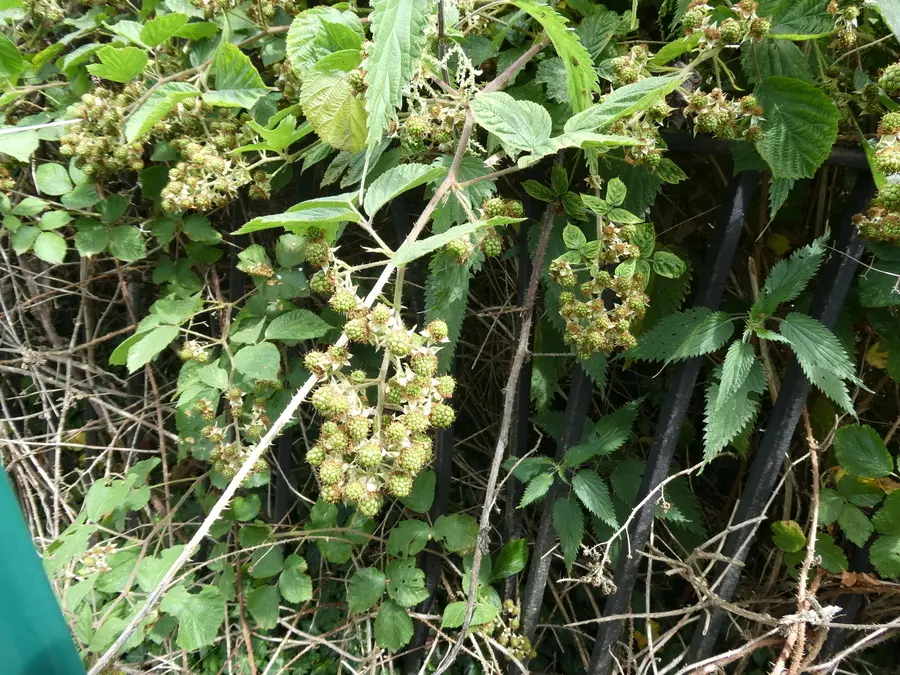 – Leominster – Heavy dark clouds move across the sky during the morning but by early afternoon although large cumulus clouds still move slowly eastwards. The sun is now beating down and it is getting hot. The footbridge over the railway is still closed. There is obviously little effort to do a rapid job to ensure the national footpath which runs over this bridge is accessible. Into Pinsley Mill. Flowering Rosebay Willowherb stands high inside the railway. Bees move from flower to flower. Brambles have an extraordinarily heavy crop of young blackberries which will be ripe in maybe a month’s time. Meadowsweet is coming into flower.
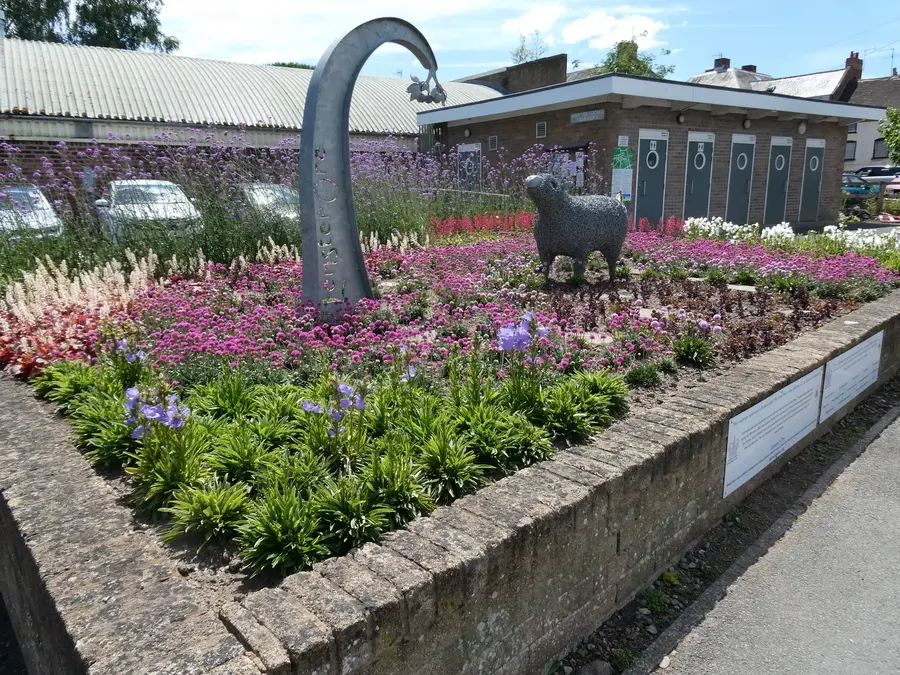 Down The Priory to Priory Bridge. The River Kenwater is crystal clear but seemingly lifeless. Through Bridge Street car park, formerly site of the town gasometers. A Great Black-backed Gull flies through, not a common sight here. The flower bed with the model Ryeland sheep and apples tree has a fine display of multi-coloured Thrift, bellflowers in purple and white, Coral Bells and Verbenas, all attracting a good number of bees and a Painted Lady butterfly.
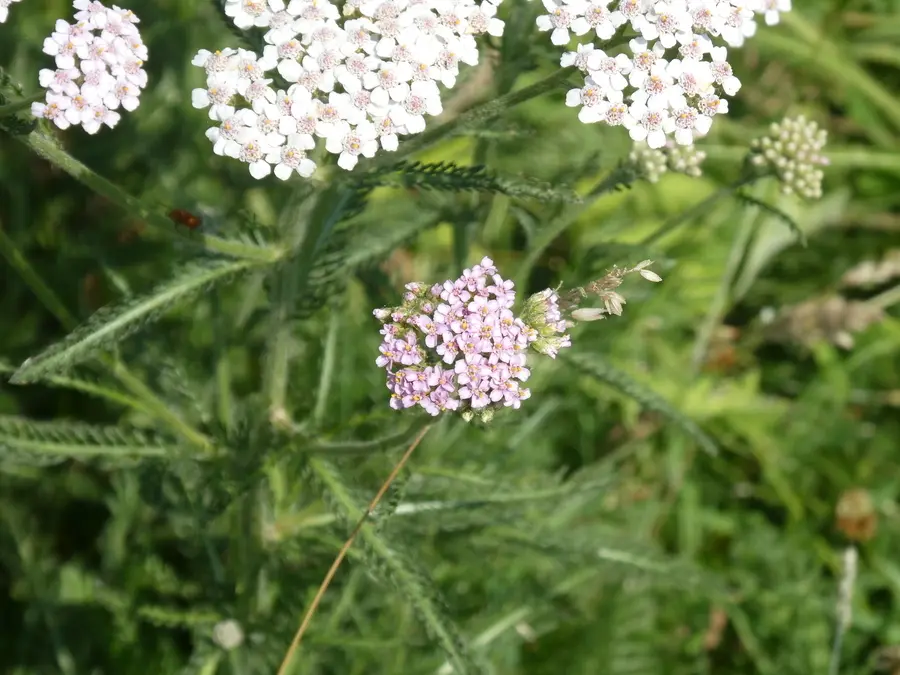 the umbellifers are rapidly turning to seed. Likewise the Meadow Cranesbills live up to their name with the circular seed heads and long beaks. The Priory rector and organist stride past.
 Mint flowers where the lake overflows. Creeping Thistle leaves are shrivelled.
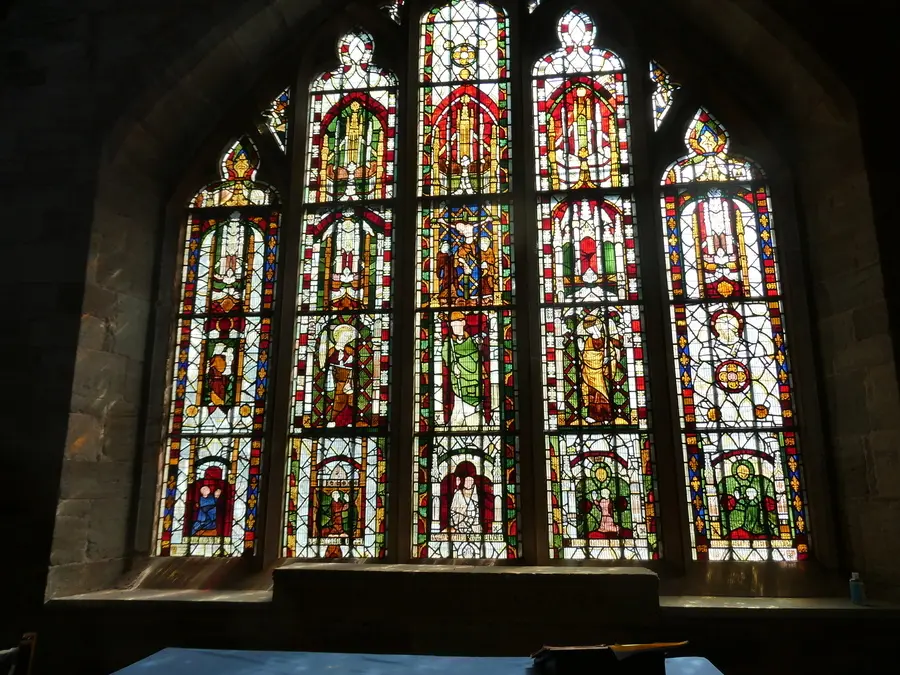 churchyard still looks abandoned. The church is locked. A Holly tree is covered in Ivy and a Bramble has grown 20 plus feet up the tree.
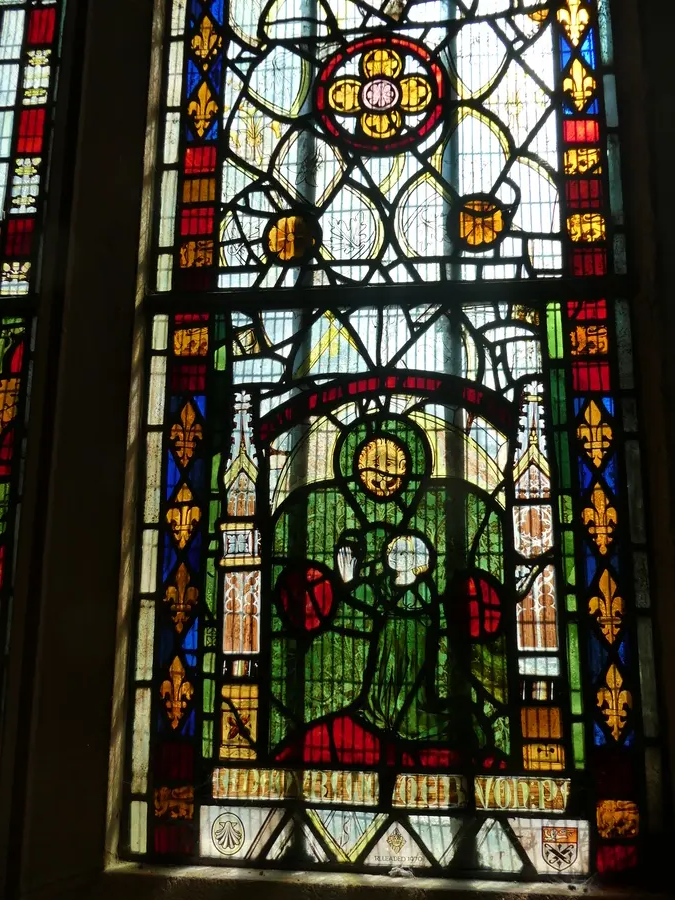 which was rebuilt in the 11th century. The roofline of this church can still be seen on the wall at the west end of the nave. The tower was probably part of the Saxon church but rebuilt by the Bishop of Hereford in the 12th century and restored in 1927. The font is 13th century, with the addition of a Victorian bowl. The pulpit is a wineglass design, with carved wooden panels. In the chancel is a 14th century sedilia composed of three bays. The 422 pipe organ, built by Eustace Ingram of Hereford, was installed in 1888. In the north aisle is a monument of “Suffer the Children” dedicated to Lady Irva Keenan Pulley, born in Illinois in 1872 and died in 1942. In the apse is a monument to Richard Sneade dated 1714. Pevsner calls the putti “ugly”.
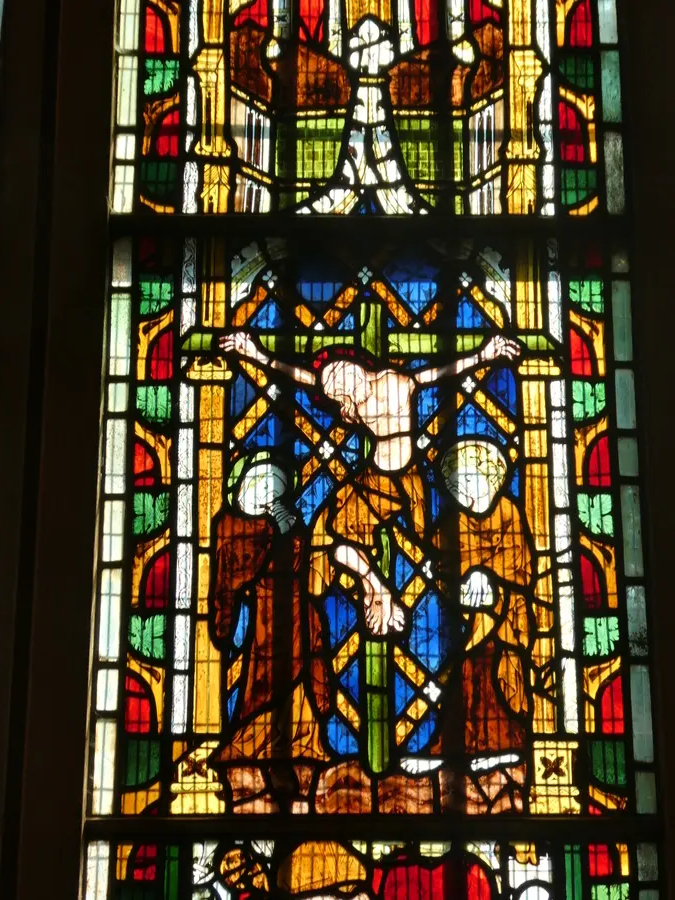 The glass in this church some of the finest in the country, indeed Pevsner calls it the finest. It is dated to 1330 to 1340 from the Lombardic inscription would refers to Adam Murimuth, “cantor”. He was likely Herefordshire born and was appointed as cantor of Exeter cathedral in 1328. His connection to Eaton Bishop is unknown. It is extraordinary that this glass, which contains three crucifixions, has survived given the iconoclasm of the 16th and 17th centuries. However there have been references suggesting the glass was removed and stored and re-mounted at a later date. It is likely that a number of pieces have been wrongly placed but this hardly detracts from the beauty of the great east window. There is further mediaeval glass in the South and North chancel windows.
 Into Grandstand Road then Yazor Road. A bus shelter advertises the fact it has a sedum roof. To the east is the vast poultry processing plant and Bulmer’s cider factory. Many of the trees along the road are showing signs of stress with number of dead branches.
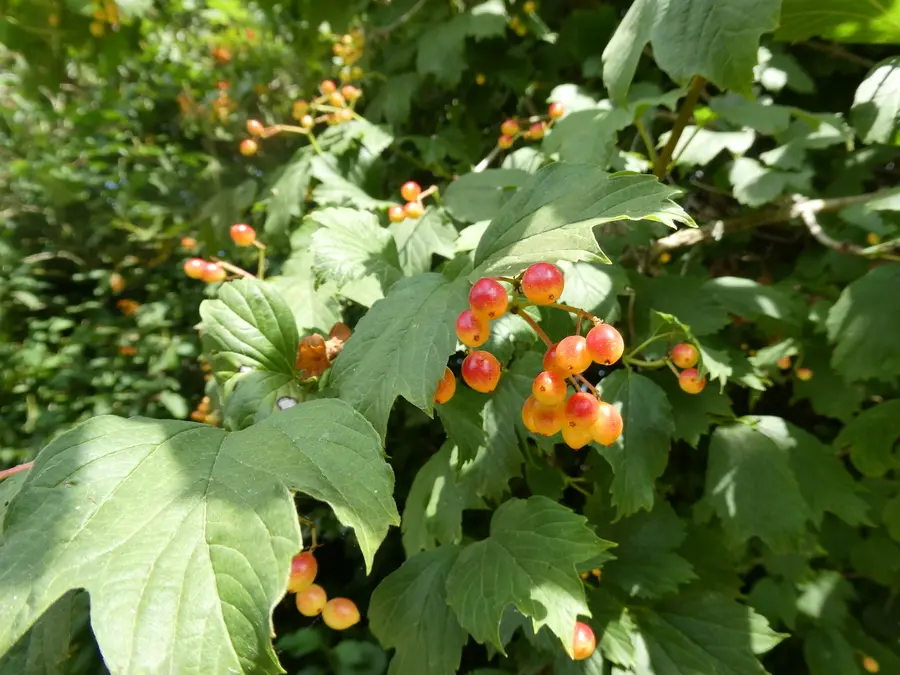 course, no-one is working on the bridge. A Common Buzzard mews as it circles high above the fields beyond the river. The Manchester bound train passes. Over the fence, many more blackberries are now ripe. A Red Admiral makes a brief visit to a Buddleia. A Comma shares a flower head with a bee. Buddleias along the fence area being visited by a good number of bees.
 Fritillary on a Creeping Thistle. Silver Birches, Hazels and Oaks have established themselves in the space between the ranks of conifers and the track. Tansy lines the trackside and behind it is a drainage ditch in which grows Water Mint. A small amount of water trickles down the drainage ditch.
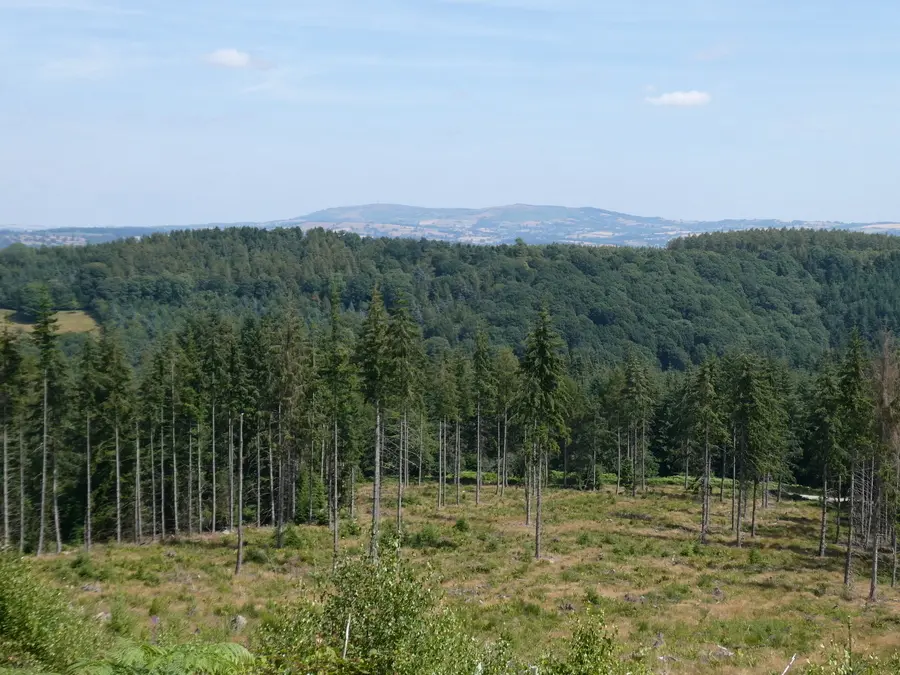 track, some flowers already a mass of white fluff. Twittering Swallows feed over Climbing Jack Common. Meadow Browns are on the Bracken. Brown, spotty young birds disappear into the undergrowth. A Small Copper butterfly is on a thistle. A Wall Brown is on a Hawkbit. More Pearl-bordered Fritillaries and Gatekeepers flit across the flower heads.
 end of its flowering. A mass of Black Bryony hangs over a wall with numerous creamy white flowers. Some elderberries are already overripe. A wall at the old school is another mass of flowering Black Bryony. The large Lavender patch is attracting a lot of bees. The clouds are beginning to obscure the sun which means hopefully today will be a more comfortable temperature.
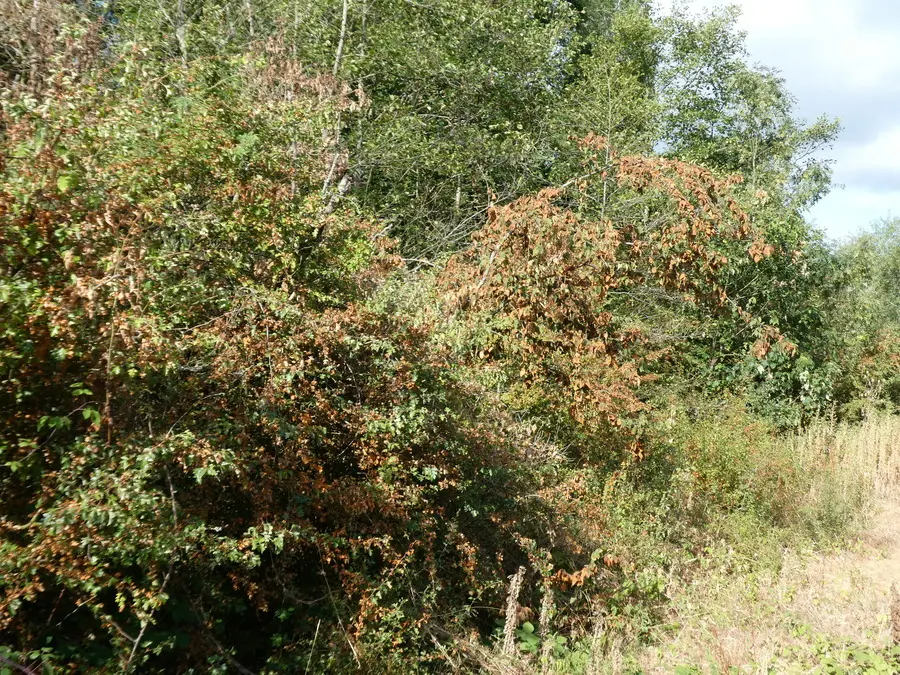 – Bodenham Lake – There is some cloud in the sky and a light westerly breeze but it is getting warm. Onto the track. A pristine Red Admiral has probably not long emerged from its chrysalis. The bell of St Michael’s rings the hour. A good many trees are showing distress as the drought continues. A Nuthatch calls. A Dunnock looks like a mouse as it creeps across the parched grass seeking seeds. A hunched back Carrion Crow barks from the
 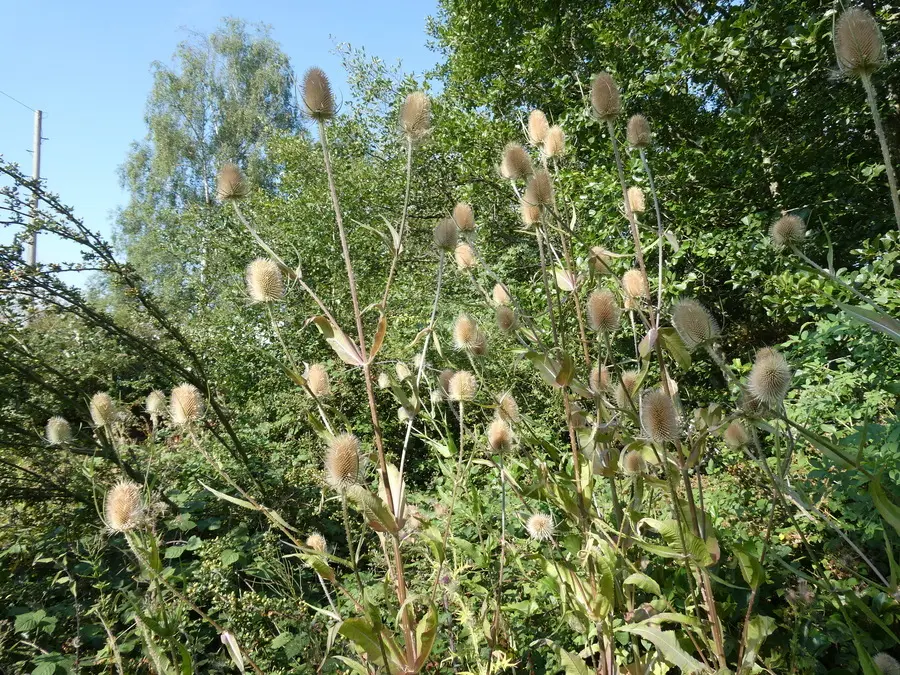 top of a dead tree. Mallard, Greylags and Canada Geese are around the sailing bay islands. It would seem that even wildfowl are feeling the heat as they just sit or float around with the minimum effort. Tall Teasels have pale brown heads.
 area beside the river is a field that still has a bit of green grass which is being rapidly consumed by a herd of cattle. A Goldfinch sings from the trees.